Welcome to the Amazon Maintenance Technician Ramsay Test guide! I'm excited to help you prepare for this important assessment. The Amazon Maintenance Technician Ramsay Test is a standardized examination designed to evaluate your technical knowledge, critical thinking, and problem-solving skills as they relate to the maintenance technician role within Amazon's facilities.
The test is developed by Ramsay Corporation, a leading provider of pre-employment assessments in the industrial and technical sectors. The exam consists of several sections, covering topics such as electrical systems, mechanical systems, hydraulic and pneumatic systems, HVAC systems, and PLCs and control systems. These sections will test your understanding of the underlying concepts and your ability to troubleshoot and repair various equipment found in an Amazon facility.
The test format typically consists of multiple-choice questions, requiring you to choose the best answer from the available options. You'll be given a specific amount of time to complete the test, which will be discussed later in the mentoring program.
The Amazon Maintenance Technician Ramsay Test is a crucial component of the hiring process for maintenance technician positions at Amazon. Amazon's facilities rely heavily on cutting-edge technology and automated systems to ensure smooth operations and deliver customer orders efficiently. As a maintenance technician, you play a vital role in keeping these systems running optimally and ensuring minimal downtime.
By passing the Ramsay Test, you demonstrate to Amazon that you have the necessary technical knowledge and problem-solving abilities to perform maintenance tasks effectively. The test results help Amazon identify candidates who are likely to succeed in their maintenance technician roles and make informed hiring decisions.
Moreover, the test enables you to showcase your skills and expertise, which can be beneficial for your professional growth and advancement within the company. Additionally, passing the test can potentially open up opportunities for specialized roles within Amazon, such as working on advanced automation systems, robotics, or other emerging technologies.
In summary, the Amazon Maintenance Technician Ramsay Test is essential for securing a position as a maintenance technician at Amazon. By excelling in this test, you'll not only increase your chances of getting hired but also lay the foundation for a successful career in the maintenance field at one of the world's leading companies. In the following sessions, we will explore each topic in detail and equip you with the knowledge and strategies necessary to achieve a high score on the test. Let's get started on this exciting journey!
Familiarization with Test Format
Test structure
Understanding the test structure is essential for effective preparation and developing a successful test-taking strategy. In this section, we'll dive into the details of the Amazon Maintenance Technician Ramsay Test structure, focusing on the number of sections and types of questions you can expect.
Number of sections
The Amazon Maintenance Technician Ramsay Test is divided into several sections, each focusing on a specific technical skill or knowledge area relevant to the maintenance technician role at Amazon. These sections typically include:
a. Electrical Systems
b. Mechanical Systems
c. Hydraulic and Pneumatic Systems
d. HVAC Systems
e. PLCs and Control Systems
Each section contains a varying number of questions, depending on the importance and complexity of the topic. It's crucial to familiarize yourself with each section and allocate sufficient time for preparation accordingly
Type of Questions
The test primarily consists of multiple-choice questions. Each question will present you with a problem or scenario related to the section's topic, and you will be required to select the best answer from the available options. Some questions might also be accompanied by images, diagrams, or schematics to provide additional context or information. In such cases, it's crucial to analyze the visual aids carefully and use them to guide your decision-making process.
Here's an example of a typical multiple-choice question you might encounter:
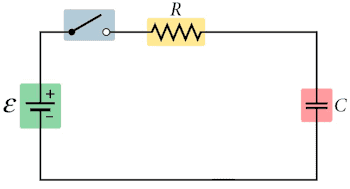
Question: In the above circuit, what happens when the switch is closed?
A. The capacitor starts charging.
B. The resistor starts discharging.
C. The current across the resistor becomes zero.
D. The voltage across the capacitor remains constant.
In this example, you would need to apply your knowledge of electrical circuits to determine the correct answer (A. The capacitor starts charging).
Keep in mind that the Amazon Maintenance Technician Ramsay Test questions may vary in difficulty, and you may come across unfamiliar or challenging questions. We will discuss various strategies and techniques for tackling these questions effectively and maximizing your chances of success.
Now that you have a better understanding of the test format, we can proceed with the technical skills development portion of the mentoring program. In the following sessions, we'll delve into each topic in detail, ensuring you have a solid grasp of the fundamental concepts and are equipped with the necessary knowledge to excel in each section of the test.
Duration of the test
The Amazon Maintenance Technician Ramsay Test is typically designed to be completed within a specific time frame. The exact duration may vary depending on the test version, but you can expect it to be around 1.5 to 2 hours. It is crucial to manage your time effectively during the test to ensure that you can answer all the questions within the allotted time.
As a general guideline, try to allocate an average of 1 to 2 minutes per question. This will give you enough time to read and comprehend the question, analyze any accompanying visuals, and make an informed decision. Keep in mind that some questions may require more time, while others may be relatively straightforward and quicker to answer. Monitoring your progress and adjusting your pace accordingly will help you optimize your time management during the test.
Test-taking strategies
Developing effective test-taking strategies is crucial for achieving success in the Amazon Maintenance Technician Ramsay Test. Some useful strategies to consider include:
- Read the question carefully: Make sure to read each question thoroughly and understand what is being asked before attempting to answer. This will help you avoid mistakes caused by misinterpretation or overlooking crucial information.
- Analyze visual aids: If a question includes an image, diagram, or schematic, take the time to analyze it carefully and relate it to the problem at hand. Visual aids can provide valuable information or context that can guide you towards the correct answer.
- Use the process of elimination: When faced with multiple-choice questions, try to eliminate the options you know are incorrect. This will narrow down your choices and increase your chances of selecting the correct answer.
- Don't get stuck on difficult questions: If you encounter a challenging question, don't spend too much time on it. Instead, make a note or flag the question, and move on to the next one. You can come back to the difficult question later if you have time remaining.
- Make educated guesses: As there is typically no penalty for incorrect answers, it's better to make an educated guess rather than leaving a question unanswered. Use your knowledge and intuition to select the most plausible answer.
- Review your answers: If you have time left after completing the test, use it to review your answers, especially those you were unsure about. Double-check your work and make any necessary changes before submitting the test.
Throughout the guide, we will discuss these strategies in more detail and provide practical tips for implementing them effectively during the test. Additionally, we will work on developing your technical skills and critical thinking abilities, which will further enhance your test-taking performance.
Looking for prep material?
Practicing is a proven way to score higher on your Amazon Maintenance Technician Ramsay Test. Find full prep packages to ace your assessment!


Problem-solving and Critical Thinking Skills
In addition to technical knowledge, the Amazon Maintenance Technician Ramsay Test also evaluates your problem-solving and critical thinking skills. These abilities are crucial for tackling complex problems and making effective decisions in a maintenance environment. In this section, we will discuss various strategies and best practices for honing these skills.
Approaching complex problems systematically
When faced with a complex problem or scenario, it is essential to approach it in a systematic and structured manner. The following steps can help you tackle complex problems effectively:
Analyze the problem: Start by carefully reading and understanding the problem statement. Identify the key components, constraints, and relationships involved.
Gather information: Collect any relevant data or information that can help you better understand the problem and identify potential solutions.
Break down the problem: Divide the problem into smaller, more manageable sub-problems or tasks. This can make the problem less overwhelming and help you focus on specific aspects more effectively.
Develop potential solutions: For each sub-problem, brainstorm and evaluate possible solutions. Consider the pros and cons of each solution and select the most viable option.
Implement and verify the solution: Apply the chosen solution and verify whether it addresses the problem effectively. If not, revisit the previous steps and explore alternative solutions.
Identifying root causes and potential solutions
To solve problems efficiently, it's crucial to identify the root cause(s) rather than addressing the symptoms. A widely-used technique for root cause analysis is the "5 Whys" method. By asking "why" repeatedly, you can drill down to the core issue and develop targeted solutions. When identifying potential solutions, consider both short-term fixes and long-term improvements to prevent the problem from recurring.
Decision-making in a maintenance environment
Effective decision-making is critical for maintenance technicians, as it directly impacts equipment performance, safety, and operational efficiency. When making decisions, consider the following factors:
Urgency: Prioritize issues that need immediate attention to prevent further damage or downtime.
Resources: Evaluate the availability of necessary tools, parts, and personnel to implement the chosen solution.
Cost-effectiveness: Consider the cost of the solution, including labor, parts, and potential downtime, and weigh it against the expected benefits.
Risk assessment: Identify any potential risks associated with the solution, such as safety hazards or equipment damage, and determine if the benefits outweigh the risks.
Safety considerations and best practices
Safety should always be a top priority when working in a maintenance environment. Follow these best practices to ensure a safe and productive work environment:
- Adhere to safety protocols: Familiarize yourself with and follow all safety procedures, guidelines, and regulations applicable to your work area.
- Use personal protective equipment (PPE): Wear appropriate PPE, such as safety glasses, gloves, and hearing protection, when performing maintenance tasks.
- Lockout/tagout procedures: Always follow lockout/tagout procedures when working on equipment to prevent accidental energization or startup.
- Maintain a clean and organized workspace: Keep your work area clean and free of clutter to minimize the risk of accidents and injuries.
- Report incidents and near misses: Promptly report any safety incidents or near misses to your supervisor to help prevent future occurrences.
By honing your problem-solving and critical thinking skills and adhering to safety best practices, you will be better prepared to tackle complex maintenance scenarios and excel in the Amazon Maintenance Technician Ramsay Test.
Looking for prep material?
Practicing is a proven way to score higher on your Amazon Maintenance Technician Ramsay Test. Find full prep packages to ace your assessment!
Test-taking Strategies and Techniques
To maximize your chances of success in the Amazon Maintenance Technician Ramsay Test, it's crucial to develop effective test-taking strategies and techniques. In this section, we will discuss various tips and recommendations to help you navigate the test confidently and efficiently.
Time management during the test
Effective time management is essential for ensuring that you can answer all the questions within the allotted time. Here are some tips for managing your time during the test:
Allocate time per question: As a general guideline, try to spend 1 to 2 minutes per question. This will give you enough time to read, comprehend, and answer each question.
Monitor your progress: Keep an eye on the time and your progress throughout the test. If you're falling behind, adjust your pace accordingly to ensure you complete the test within the allotted time.
Prioritize questions: Answer easier questions first to build momentum and confidence. Tackle more challenging questions later, once you've secured a solid base of correct answers.
Answering multiple-choice questions effectively
The Amazon Maintenance Technician Ramsay Test consists primarily of multiple-choice questions. To answer these questions effectively, follow these tips:
Read the question carefully: Ensure you understand what is being asked before attempting to answer. Misinterpretation or overlooking crucial information can lead to incorrect answers.
Eliminate incorrect options: Use the process of elimination to narrow down your choices. Eliminating options you know are incorrect increases your chances of selecting the correct answer.
Look for clues: Sometimes, the wording of a question or its options may provide hints that can help you determine the correct answer. Be attentive to these clues.
Trust your instincts: If you're unsure about an answer, trust your instincts and make an educated guess. Your first instinct is often correct, especially if you've prepared well for the test.
Handling difficult or unfamiliar questions
When faced with difficult or unfamiliar questions, keep the following tips in mind:
Don't panic: Stay calm and focused. Remember that not all questions are meant to be easy, and it's normal to encounter challenging questions.
Break down the question: Analyze the question and break it down into smaller, more manageable components. This can help you better understand the problem and potentially identify the correct answer.
Use your knowledge: Apply your knowledge of related concepts to make an educated guess. Even if you're not entirely sure of the answer, your knowledge and experience can guide you toward the most plausible option.
Move on and return later: If a question is too challenging or time-consuming, make a note or flag it and move on to the next question. You can return to the difficult question later if you have time remaining.
Tips for reducing test anxiety
Test anxiety is a common issue that can negatively impact your performance. Here are some tips for managing anxiety before and during the test:
Be prepared: Thorough preparation can boost your confidence and reduce anxiety. Make sure you understand the test format, have a solid grasp of the necessary technical skills, and have practiced your problem-solving and critical thinking skills.
Develop a test-day routine: Establish a routine for the day of the test, including a healthy breakfast, light exercise, and relaxation techniques to help you stay calm and focused.
Breathe and relax: During the test, take deep, slow breaths and practice relaxation techniques to help manage anxiety. If you find yourself becoming overwhelmed, pause for a moment, close your eyes, and take a few deep breaths before continuing.
Maintain a positive mindset: Remind yourself of your preparation and the progress you've made throughout the mentoring program. Believe in your abilities and stay confident in your knowledge and skills.
Looking for prep material?
Practicing is a proven way to score higher on your Amazon Maintenance Technician Ramsay Test. Find full prep packages to ace your assessment!
Conclusion
In conclusion, the Amazon Maintenance Technician Ramsay Test is a comprehensive assessment that evaluates your technical knowledge, problem-solving, and critical thinking skills. To ensure success, it's crucial to familiarize yourself with the test format, structure, and scoring criteria. Allocate sufficient time for preparation and focus on developing your technical skills in areas such as electrical, mechanical, hydraulic, and pneumatic systems, HVAC systems, and PLCs and control systems.
Effective time management, test-taking strategies, and techniques are essential for optimizing your performance during the test. Prioritize questions, use the process of elimination, and handle difficult questions methodically to maximize your chances of success. Additionally, enhancing your problem-solving and critical thinking skills will enable you to approach complex maintenance scenarios confidently and efficiently.
Remember to focus on safety considerations and best practices, as they are vital for maintaining a secure and productive work environment. Finally, managing test anxiety and maintaining a positive mindset will help you stay focused and calm during the test.
By following this guide, you will be well-equipped to tackle the Amazon Maintenance Technician Ramsay Test and demonstrate your expertise, potential, and readiness for the maintenance technician role at Amazon.
Looking for prep material?
Practicing is a proven way to score higher on your Amazon Maintenance Technician Ramsay Test. Find full prep packages to ace your assessment!