Solving Tool Questions on the Mechanical Aptitude Test
Welcome to our comprehensive guide on tools and problem-solving strategies, designed to help you prepare for mechanical aptitude tests and enhance your understanding of various tools and their applications. As your mentor, I am here to provide detailed explanations, practical examples, and hands-on exercises to help you develop a solid foundation in this essential area.
Mechanical aptitude tests are designed to assess your ability to understand and apply basic mechanical concepts and principles. These tests are often used in technical and trade professions, as well as for military, emergency services, and other job selection processes. One of the key components of these tests is understanding how different tools work and how to apply them to solve practical problems.
As we delve into each topic, you will gain a better understanding of the various tools available and their applications, along with the terminology and problem-solving strategies needed to excel in mechanical aptitude tests and real-world situations.
Remember, the key to mastering these concepts is practice and patience. As you work through this guide, take the time to familiarize yourself with each tool, term, and problem-solving strategy, and apply your newfound knowledge to a variety of scenarios. This hands-on approach will help you build your confidence, enhance your mechanical aptitude, and prepare you for success in your chosen profession.
Common Tools and Their Uses
Looking for prep material on this topic?
Practicing is a proven way to score higher on your Mechanical Aptitude Test. Find full prep packages to ace your assessment!


Hand tools
- Screwdrivers
- Purpose: To drive or remove screws.
- Types: Flathead (slotted) and Phillips (crosshead) are the most common, but there are other types, such as Torx, Robertson, and Allen (hex key).
- How to use: Select the appropriate screwdriver for the screw type. Insert the tip into the screw head and apply pressure while turning clockwise to tighten or counterclockwise to loosen.
- Pliers
- Purpose: To grip, hold, cut, bend, or manipulate objects, such as wires or small parts.
- Types: Needle-nose, slip-joint, locking, diagonal cutting, and lineman's pliers.
- How to use: Select the appropriate pliers for the task. Grip the object with the jaws and apply pressure by squeezing the handles. Some pliers have built-in wire cutters or strippers for specific tasks.
- Wrenches
- Purpose: To apply torque to turn bolts, nuts, or other threaded fasteners.
- Types: Adjustable, open-end, combination, socket, and box wrenches.
- How to use: Select the correct size and type of wrench for the fastener. Place the wrench onto the nut or bolt, ensuring proper contact, and turn clockwise to tighten or counterclockwise to loosen.
- Hammers
- Purpose: To deliver force, typically for driving nails or breaking objects.
- Types: Claw, ball-peen, sledge, and rubber mallets.
- How to use: Select the appropriate hammer for the task. Hold the handle with a firm grip, and swing the hammer using your arm and wrist to strike the object with the hammerhead. For nail removal, use the claw end of a claw hammer to grip and extract the nail.
- Saws
- Purpose: To cut materials, such as wood, metal, or plastic.
- Types: Hand saws (crosscut, rip, backsaw, hacksaw) and coping saws.
- How to use: Choose the right saw for the material and type of cut. Hold the handle with a firm grip, and place the saw's teeth on the material to be cut. Apply pressure while pushing or pulling, depending on the saw type, and move the saw back and forth to make the cut.
- Measuring tools (ruler, tape measure, calipers)
- Purpose: To measure length, width, depth, or thickness.
- How to use: a. Ruler: Align the edge of the ruler with the starting point, and read the measurement at the endpoint. b. Tape measure: Extend the tape from the starting point to the endpoint, and read the measurement on the tape. c. Calipers: Loosen the locking screw, position the caliper jaws around the object or in a hole, tighten the locking screw, and read the measurement on the scale or digital display.
Power tools
- Drills
- Purpose: To create holes or drive screws.
- How to use: Choose the correct drill bit or driver for the task. Insert the bit into the drill chuck, and tighten the chuck securely. Hold the drill with a firm grip, align the bit with the desired location, and pull the trigger to start drilling or driving.

- Sanders
- Purpose: To smooth or shape surfaces using sandpaper.
- Types: Orbital, detail, belt, and disc sanders.
- How to use: Select the appropriate sander and sandpaper grit for the task. Attach the sandpaper to the sander, and hold the sander with a firm grip. Turn on the sander and apply even pressure, moving the sander back and forth over the surface to be smoothed or shaped. Ensure that you don't linger too long in one spot to avoid creating uneven surfaces or damaging the material.
- Saws (circular saw, jigsaw)
Purpose: To make straight or curved cuts in materials like wood, plastic, or metal.
How to use: a. Circular saw: Select the correct blade for the material to be cut. Adjust the saw's cutting depth, and set up any required guides. Hold the saw with a firm grip, and align the blade with the cutting line. Turn on the saw, and guide it along the cutting line, applying steady pressure.
Jigsaw: Choose the appropriate blade for the material and type of cut. Insert the blade into the jigsaw, and adjust any necessary settings (e.g., speed or orbital action). Hold the jigsaw with a firm grip, align the blade with the cutting line, turn on the jigsaw, and guide it along the cutting line, following any curves or angles as needed.

- Grinders
- Purpose: To grind, sharpen, or remove material from surfaces.
- Types: Angle grinders and bench grinders.
- How to use: Choose the appropriate grinding wheel or attachment for the task. For angle grinders, attach the grinding wheel and adjust any necessary settings. Hold the grinder with a firm grip, turn it on, and apply the grinding wheel to the surface with even pressure, moving it back and forth as needed. For bench grinders, turn on the grinder and hold the object securely against the grinding wheel, moving it back and forth as needed.
Specialized tools
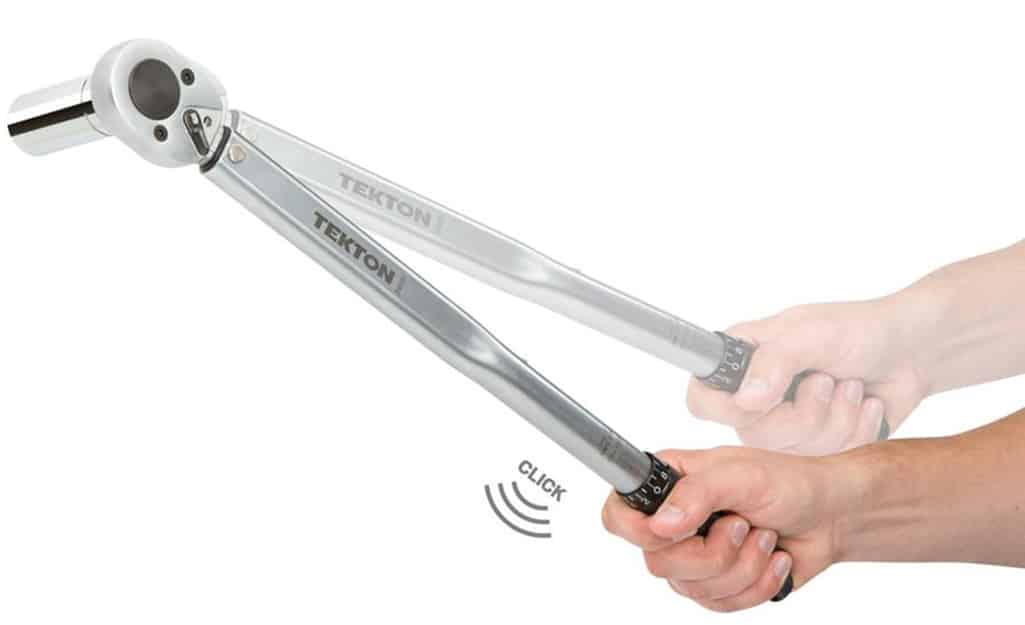
- Torque wrench
Purpose: To apply a specific amount of torque to a nut, bolt, or other fasteners.
How to use: Select the correct socket for the fastener. Attach the socket to the torque wrench and set the desired torque value on the wrench. Place the socket onto the fastener, and turn the wrench until you hear or feel the "click" that indicates the set torque has been reached.
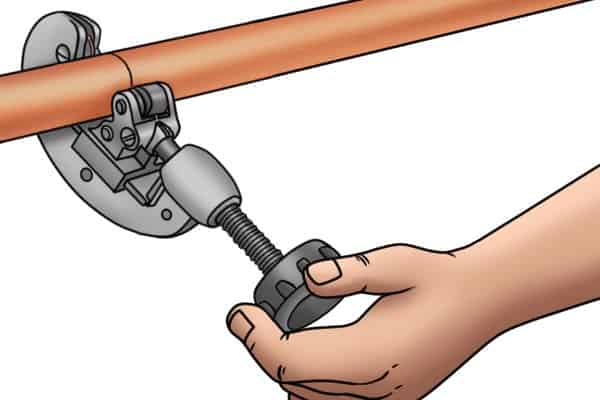
- Pipe cutter
Purpose: To cut pipes, typically made of copper, PVC, or other materials.
Types: Rotary (tubing) cutters, ratcheting cutters, and chain cutters.
How to use: Choose the appropriate cutter for the pipe material and diameter. Position the pipe cutter around the pipe, aligning the cutting wheel or blade with the desired cutting line. Apply pressure and rotate the cutter around the pipe, tightening the cutter as needed, until the pipe is cut through.
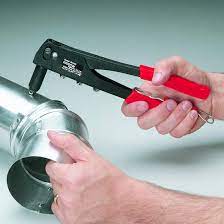
- Rivet gun
Purpose: To install rivets, which are used to join materials together.
How to use: Select the correct size and type of rivet for the task. Insert the rivet into the pre-drilled hole, aligning the materials to be joined. Insert the rivet's mandrel into the rivet gun's nosepiece, and squeeze the handle repeatedly until the rivet is set and the mandrel breaks off.
Remember, the key to mastering the use of these tools is practice. Spend time familiarizing yourself with each tool and its uses, and try using them in various scenarios to build your confidence and skill.
Understanding Tool Terminology
Looking for prep material on this topic?
Practicing is a proven way to score higher on your Mechanical Aptitude Test. Find full prep packages to ace your assessment!
Essential terms
- Torque
- Definition: A rotational force applied to an object, typically used to tighten or loosen fasteners like nuts and bolts. Torque is measured in units such as pound-feet (lb-ft) or Newton-meters (Nm).
- Example: When using a wrench or a torque wrench to tighten a bolt, you are applying torque to the bolt to secure it in place.
- Tension
- Definition: A pulling force that stretches or elongates an object, often used to describe the force exerted on ropes, cables, or chains.
- Example: When pulling on a rope in a game of tug-of-war, you are creating tension in the rope.
- Compression
- Definition: A pushing force that squeezes or compacts an object, reducing its size or volume.
- Example: When you press down on a spring, you are applying a compressive force, causing the spring to shorten.
- Friction
- Definition: A resistive force between two objects in contact with each other, opposing their relative motion. Friction can be divided into two types: static friction (resisting the initiation of motion) and kinetic friction (resisting motion that is already occurring).
- Example: When using sandpaper to smooth a wooden surface, the friction between the sandpaper and the wood helps to remove material and create a smoother surface.
- Lever
- Definition: A simple machine consisting of a rigid bar that pivots around a fixed point (the fulcrum) to transmit force. Levers can be used to amplify force, increase speed, or change the direction of force. Levers are classified into three types based on the relative positions of the fulcrum, load, and effort.
- Example: A crowbar is a type of lever that can be used to lift or pry objects by applying force at one end, with the fulcrum placed near the object being lifted.
- Fulcrum
- Definition: The fixed point around which a lever pivots. The position of the fulcrum influences the mechanical advantage of the lever, determining the amount of force needed to lift or move an object.
- Example: In a seesaw, the fulcrum is the central pivot point on which the plank (lever) balances, allowing people to lift each other by applying force on opposite ends of the plank.
Practice: Match terms with their definitions
Looking for prep material on this topic?
Practicing is a proven way to score higher on your Mechanical Aptitude Test. Find full prep packages to ace your assessment!
In this exercise, you will match the terms we've discussed with their corresponding definitions. Read each term and definition, and try to match them correctly. The answers are provided below.
1) Torque
2) Tension
3) Compression
4) Friction
5) Lever
6) Fulcrum
a. A pulling force that stretches or elongates an object.
b. The fixed point around which a lever pivots.
c. A rotational force applied to an object.
d. A pushing force that squeezes or compacts an object.
e. A resistive force between two objects in contact with each other.
f. A simple machine consisting of a rigid bar that pivots around a fixed point.
1 - c (Torque)
2 - a (Tension)
3 - d (Compression)
4 - e (Friction)
5 - f (Lever)
6 - b (Fulcrum)
Understanding these essential terms will help you better comprehend how tools and simple machines work, and how they can be used effectively in various mechanical tasks.
Tool Problem Solving Strategies
Analyzing the problem
- Identifying the required tool(s)
- Carefully read and understand the problem or task at hand.
- Determine the type of action required (e.g., tightening, loosening, cutting, measuring).
- Based on the action and the materials involved, identify the appropriate tool(s) needed to perform the task efficiently and effectively.
- Understanding the purpose of the tool(s)
- Familiarize yourself with the functions and capabilities of the chosen tool(s).
- Consider the specific purpose of the tool in the context of the problem (e.g., a wrench is used to tighten a bolt, but its purpose in a specific scenario might be to secure a bracket or fasten two components together).
- Recognizing the correct tool operation
- Learn the proper technique for using the selected tool(s), including any safety precautions or guidelines.
- Understand the limitations of the tool, and avoid using it in ways that could damage the tool, the materials, or yourself.
Visualizing the solution
- Imagining the tool in action
- Create a mental picture of how the tool will be used in the given situation.
- Consider factors such as the angle of approach, the direction of force, and the positioning of your body in relation to the tool and the materials being worked on.
- Predicting the outcome of the tool usage
- Envision the expected outcome once the task is completed using the chosen tool(s).
- Assess the potential risks, difficulties, or complications that may arise during the process, and plan accordingly to mitigate or address them.
Practice: Tool identification and usage scenarios
To develop your problem-solving skills, work through various tool identification and usage scenarios. This practice will help you become familiar with different tools and their applications, and improve your ability to select and use the appropriate tool for a given task.
Scenario 1:
Task: You need to assemble a flat-pack furniture item, which requires tightening several bolts.
Required Tool(s): Allen (hex) key or hex bit screwdriver
Visualization: Picture yourself using the hex key to insert into the bolt head, turning it clockwise to tighten the bolt securely.
Scenario 2:
Task: You have to cut a PVC pipe to a specific length for a plumbing project.
Required Tool(s): Pipe cutter or hacksaw
Visualization: Envision clamping the pipe securely, marking the cut line, and using the pipe cutter or hacksaw to make a clean, straight cut.
Scenario 3:
Task: You must measure the dimensions of a wooden board to determine if it is suitable for a carpentry project.
Required Tool(s): Tape measure or ruler
Visualization: Imagine extending the tape measure or positioning the ruler along the edges of the board, taking accurate measurements of its length, width, and thickness.
By practicing various scenarios and visualizing the correct tool usage, you will build your confidence and develop a strong foundation in problem-solving strategies for mechanical aptitude tests and real-world applications.